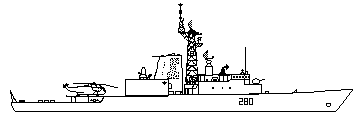
Characteristics:
Displacement:
|
5,100 tons full load
|
Dimensions:
|
128.92 x 15.24 x 4.42 meters (423 x 50 x
14.5 feet)
|
Propulsion:
|
2 shafts;
2 570 KF cruise gas turbines, 12,788 shp;
2 FT4A boost gas turbines, 51,000 shp;
29 knots
|
Crew:
|
285
|
Aviation:
|
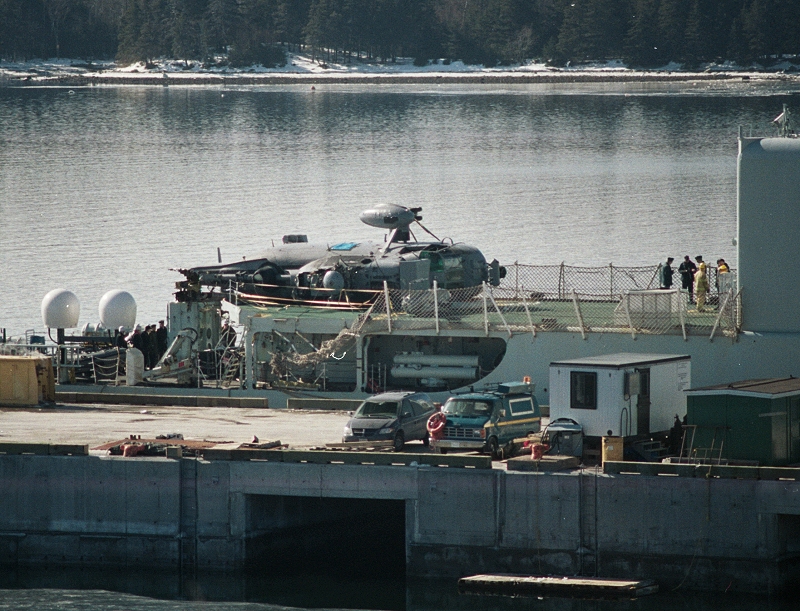
midships helicopter deck with Beartrap;
2 CH-124 Sea King helicopters
|
Hangar:
|
two, each for one CH-124
|
Radar:
|
AN/SPQ 501 (Signaal DA-08) air/surface
search
AN/SPQ 502 (Signaal LW-08) air search
|
Sonar:
|
SQS-510 hull
SQS-510 VDS
|
Fire Control:
|
2 AN/SPG 501 (Signaal STIR 1.8)
1 LIROD (Lightweight Radar and Optronic Director)
|
EW:
|
SLQ-501 intercept
SLQ-503 jammer
4 6-barrelled Plessy SHIELD IR/chaff
Nulka hovering decoy system
SLQ-25 Nixie
|
Armament:
|
1 29 cell Mk.41 VLS (Standard SM-2MR Block
IIIA)
1 76mm/62 OTO Melara (Super Rapid) DP gun
.50 calibre machine guns
1 20 mm Phalanx CIWS Mod 1B (upgrade to mod 1B in progress)
2 triple Mk.32 12.75 inch torpedo tubes firing Mk.46 Mod 5 torpedoes.
|

Ships:
|
Name
|
Pendant
|
Commissioned
|
TRUMP
|
Paid Off
|
Homeport
|
|
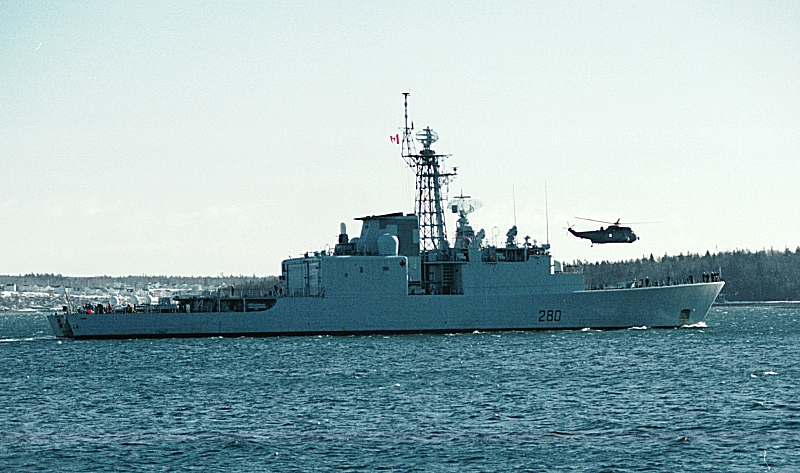
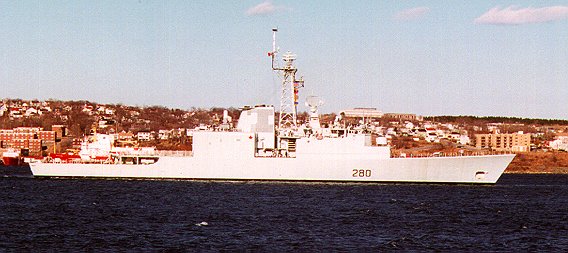
IROQUOIS
|
280
|
29/07/72
|
03/07/92
|
|
Halifax
|
|
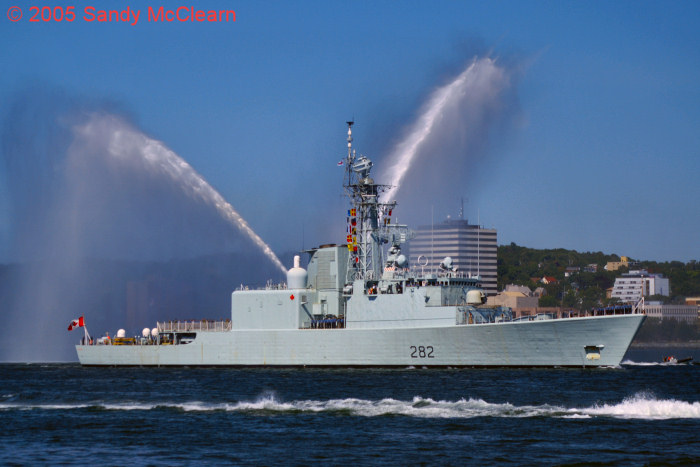
ATHABASKAN
|
282
|
30/09/72
|
04/06/94
|
|
Halifax
|
|
ALGONQUIN
|
283
|
03/11/73
|
11/10/91
|
|
Esquimalt
|
Notes:
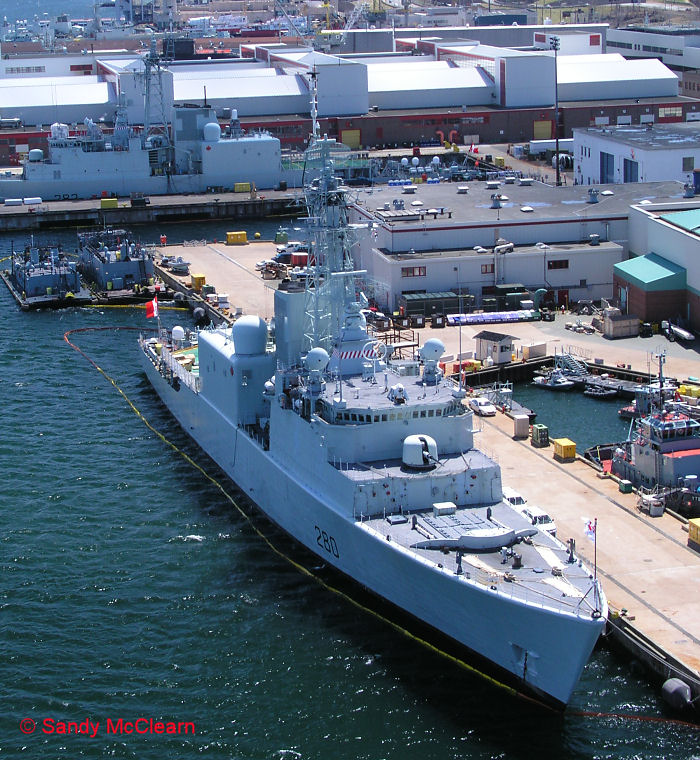
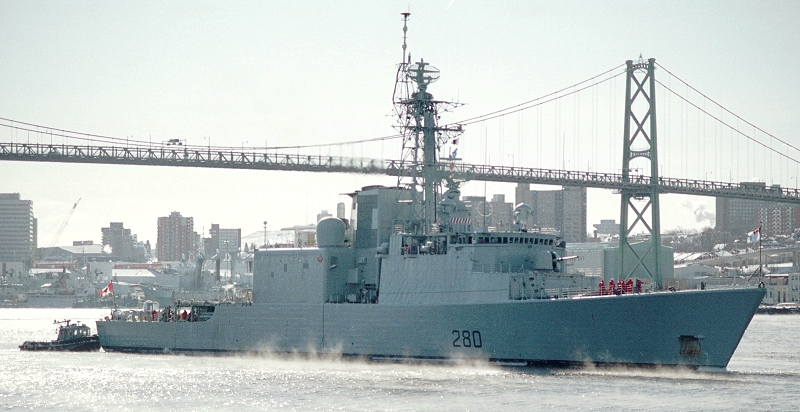
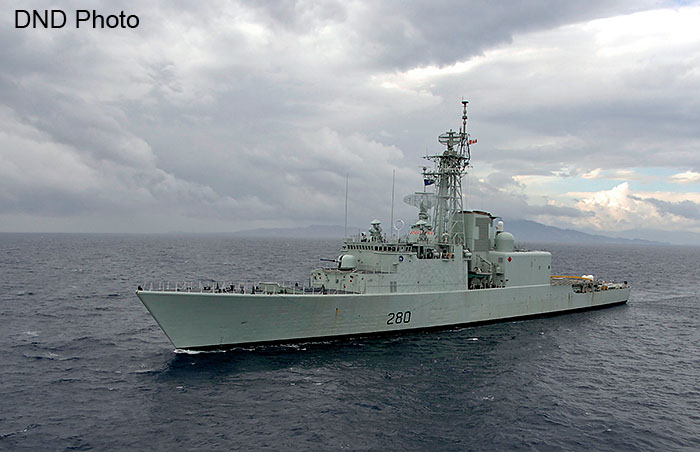
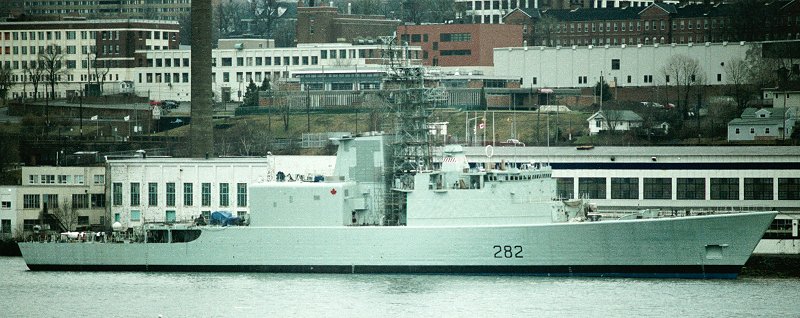
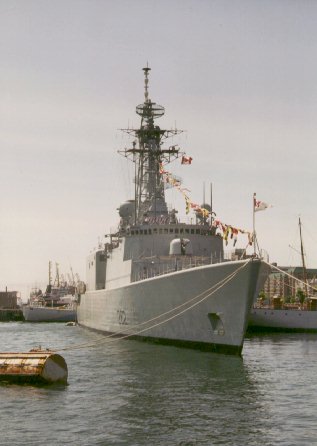
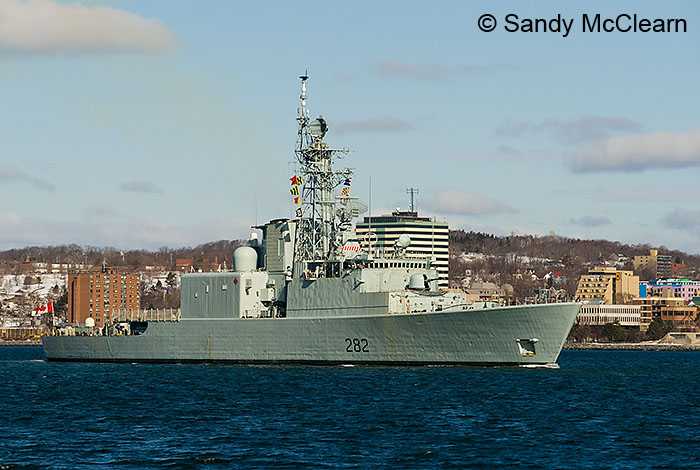
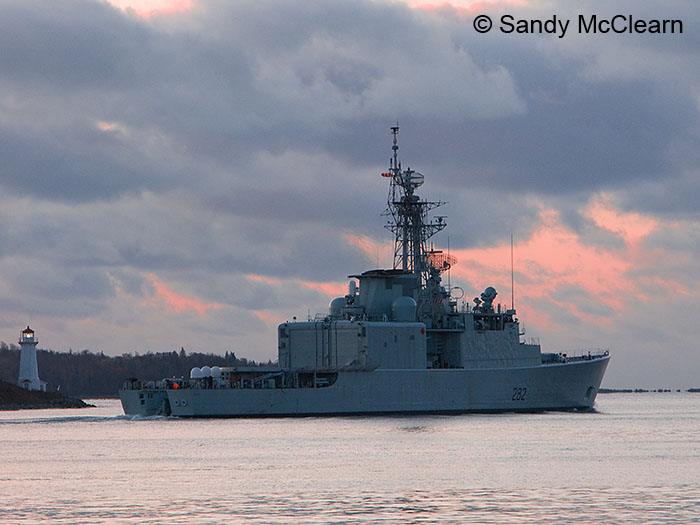
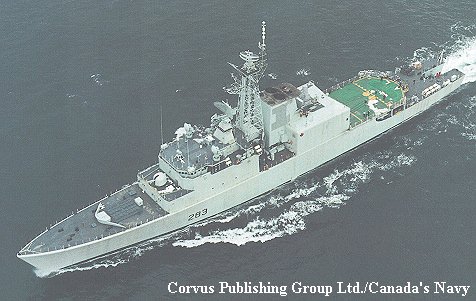
These destroyers were all launched in the early 1970's,
primarily as anti-submarine destroyers. The first Canadian
warships (other than
AORs) to carry multiple helicopters, they were also the first ships to
be
powered entirely by gas turbines in a COGOG (COmbined Gas Or Gas)
arrangement. Well suited to sea conditions in the North Atlantic, they
made very effective anti-submarine platforms.
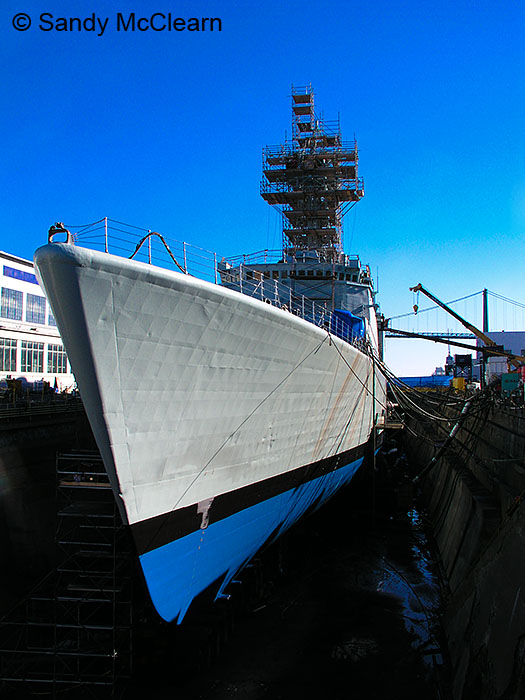
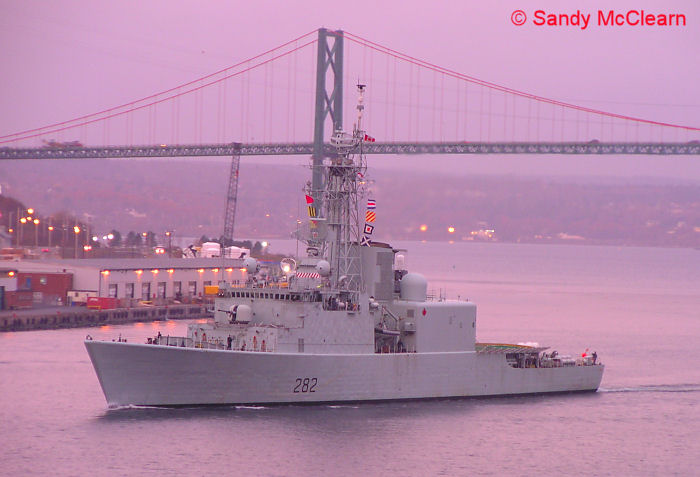
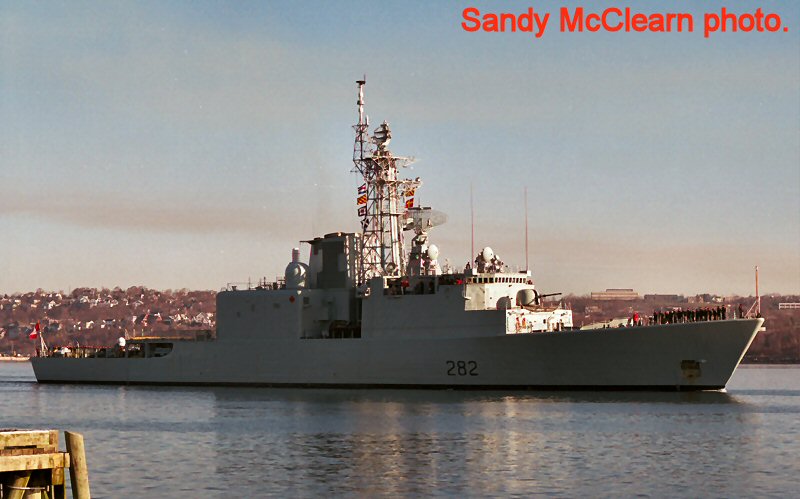
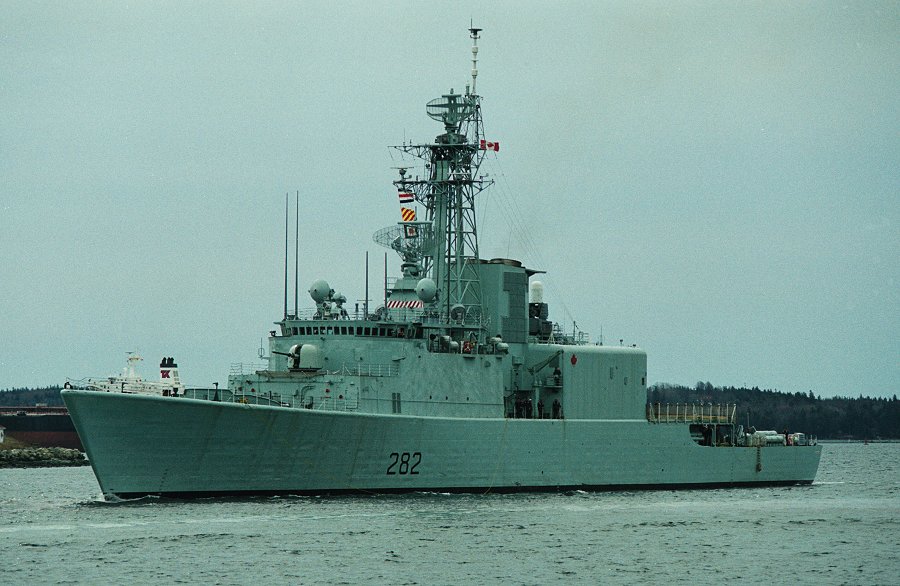
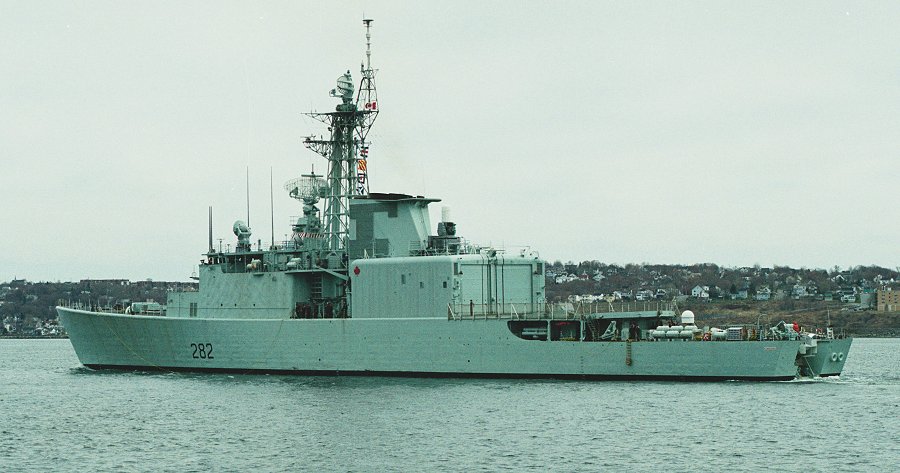
During the late 80's and early 90's, they underwent major refits under
TRUMP (Tribal Class Update and Modernization Program) and emerged as
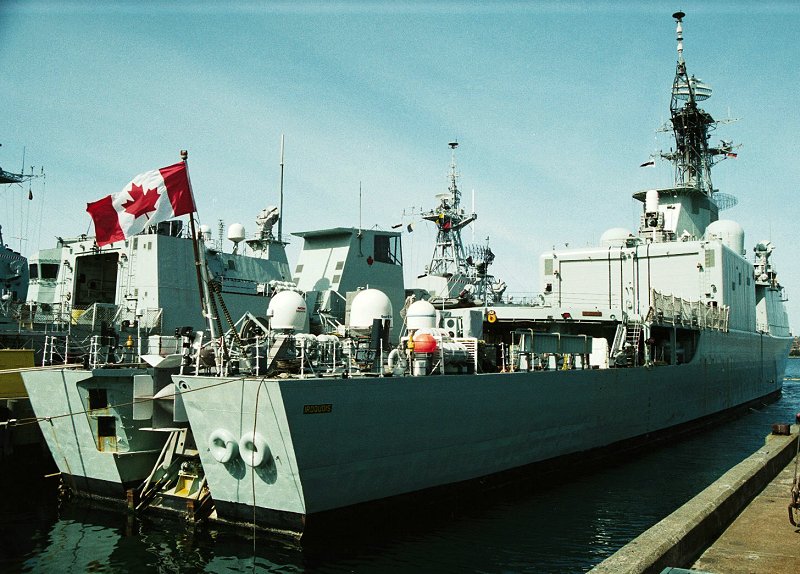
area air defence destroyers. TRUMP saw the "playboy bunny" funnels
replaced with a single large funnel, the addition of new search and
fire control radars, the replacement of the old 5" gun with a new 76mm
one, the addition of a
Mk.41 VLS, and other changes. Although hampered slightly by the lack of
a
3D radar (cut as a cost saving measure), it is nevertheless reported
that
they can shoot down any aircraft within 50 nautical miles with their
Standard
SM-2 (MR) missiles. Though greatly improved, it should be noted that
TRUMP
was a stopgap measure only, and these ships are not in serious
competition
with purpose-built AAW ships such as the USN's Arleigh Burke (DDG 51)
class.
More recent sonar upgrades ensure continued ASW abilities.
Due to manpower shortages the fourth sistership, HMCS
HURON, was laid up on the West Coast with minimal crew on board for
several years.
She did not receive the new communications systems fitted to the other
three ships of the class, and she was partially cannibalized to keep
her sisters operating. HURON was paid off on March
31, 2005, and was sunk as a target during an exercise in 2007.
The Nulka hovering decoy system has been fitted to two ships of
the class; presumably these two mounts will be rotated to ensure that
ships
on active duty are fitted. IROQUOIS and ALGONQUIN have deployed to
support
Operation Apollo in the North Arabian Sea. ATHABASKAN underwent a refit
during late 2001 / 2002, and is now (2004/05) back in service. IROQUOIS
was
completing a refit during the summer of 2005.
Currently, it looks as though these ships will not be replaced
in a
timely manner when they are paid off, which may leave the Navy without
any long range air defence capability for a period of time. Although
these ships
should
probably be replaced by 2010, they are currently not slated to be
replaced
until 2017, and will be kept in service until that date if it is
feasible.
These ships will not receive the new Cyclone helicopters, and will
continue
to operate Sea Kings as long as they are available.
Take a tour
of an IROQUOIS class destroyer.
Photos:
(click on the thumbnails to access larger images)
All photos by Sandy McClearn, unless otherwise noted.
|
ALGONQUIN
|
|
Notes:
|
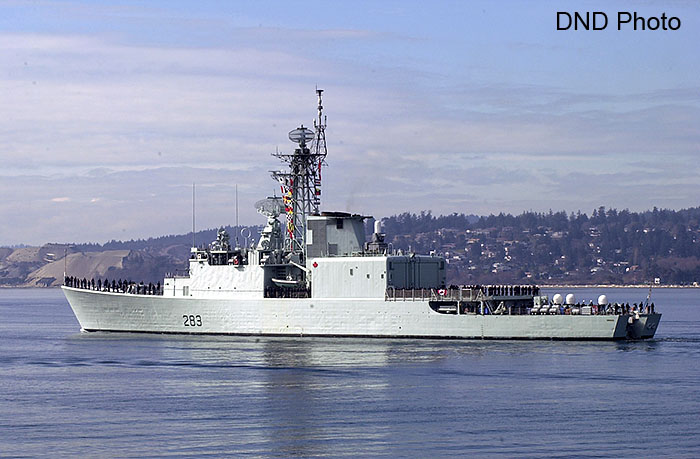
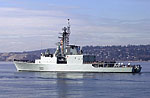
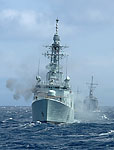
1. HMCS ALGONQUIN enters
Halifax
Harbour after her TRUMP refit. ('91) DND Photo.
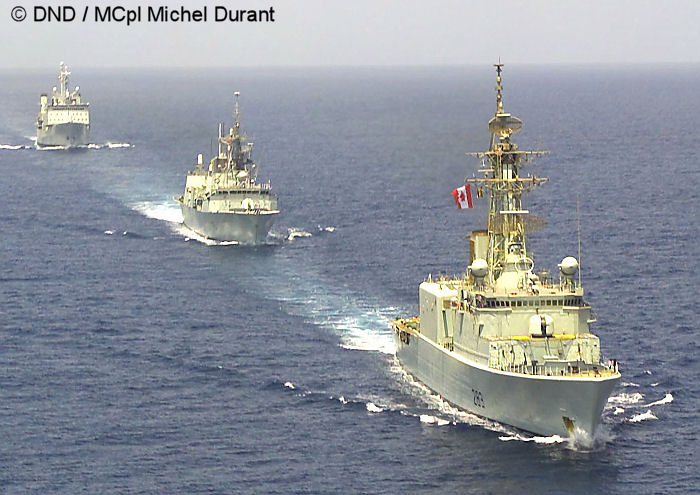
2. ALGONQUIN leading a frigate and HMCS PROTECTEUR. DND photo / MCpl
Michel Durant.
3. ALGONQUIN departs Esqimalt. DND photo, Cpl Charles Barber.
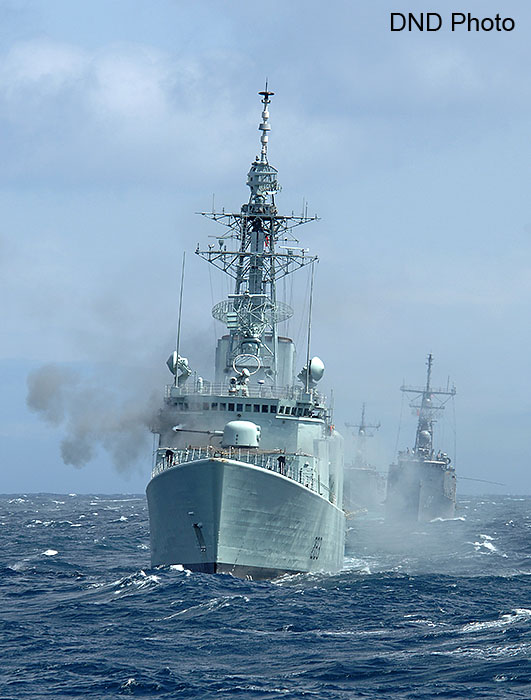
4. ALGONQUIN fires her 76mm gun during an exercise. (2007) DND photo,
MCpl Robert Bottrill.
|
|
1
|
2
|
3
|
4
|
|
|
|
|
5
|
6
|
7
|
8
|
|
|
|
|
|